Almost there, ready for the final rush once the tryptophan rush wears off. It does not look like I will "win" this year, but my personal victory is not far: the novel is continuing, the plot almost makes sense and I'm definitely enjoying quality time with my cast of characters. If "Fire Season" won't be done by Sunday, it will definitely be finished in first draft sometimes in December.
And I'm thankful for that, as for being able to play with the stuff my dreams are made of. Not everyone has this chance. Happy Turkey Day to all.
Thursday, November 27, 2008
Thursday, November 20, 2008
Like river, like knot

I often find myself reading several books at once, especially if I’m making my way through nonfiction, which I dislike as entertainment but find occasionally useful. It usually takes just a few paragraphs to get back into that particular story. Some people find this strange, yet they probably follow several weekly or daily TV serials without any less enjoyment.
Some of the books I have read recently however incorporate multiple voices and span years and intertwined plotlines to a point that they move and breathe like multiple intersected novels. One example of that is Sacred Games, a wonderful book whose narrative I follow like current on a river. Other mysteries feel more like knots, convoluted but tight and matter-of-factly.
Most hard boiled falls into this category, Also I love Sue Grafton’s series not just because of its local focus but also for its simple, efficient approach to narrative. Speaking of knots, I’m currently reading also N is for Noose, and it’s difficult to think that these two novels are even in the same genre. I’m not interested in matters of artistic value, of course: all I care for, at least during this month, is to dissect what works, and find out what makes it tick.
So will my novel be like a river or like a knot? Of course I have no ambition to write something with the details and complexity of Vikram Chandra’s novel (which took seven years to complete, something like 84 times the length of NaNoWriMo) but as I move along I find out more about how things work. Initially everything feels like white water rapids, unformed, incomplete ideas spraying around, increasing possibility of sinking or being thrown off course. Then one goes back, little by little, tying the knot.
And that’s what I’m going to do today
Wednesday, November 19, 2008
Limping along

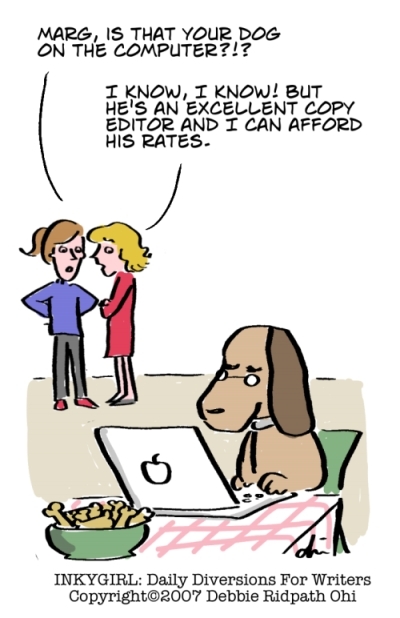
Guests, wildfires, dinners, meetings, more meetings, last minute crises, computer malfunctions, fog, too hot, too cold, dog is sick, dog ate my manuscript, printer is out of toner, forgot to recharge laptop, I'm hungry, sleepy, uninspired, lazy, busy, too restless, too lethargic, too interested in other things, no longer interested in anything at all...
Many are the excuses and pitfalls of this month-long ordeal. Just one thought: gotta keep typing those words in. Some parts are inevitably going to suck. Let's leave this out of the feedback loop, evaluate later and, if needed, rewrite. Back to the book!
Thursday, November 13, 2008
All of a sudden, my novel is news
Some of the imaginary drama of my novel, Fire Season, is on the radio right now, Montecito is burning, one canyon away from the fictitious house Nino leaves the night of the fire.
It's a tragedy, families on the run, houses being burned to the ground, the most beautiful part of Santa Barbara going up in smoke. Maybe because I've been writing for so many days about this, I feel really like some inner part of me is going up in flames.
News abound, pictures below:
It's a tragedy, families on the run, houses being burned to the ground, the most beautiful part of Santa Barbara going up in smoke. Maybe because I've been writing for so many days about this, I feel really like some inner part of me is going up in flames.
News abound, pictures below:
Tuesday, November 11, 2008
No blogging today
Monday, November 10, 2008
Falling behind
I’m falling quite behind Chris Baty's target of “15k by Monday.” I am not excessively worried as I have tons of notes and outlines for future parts of the novel. However, psychologically it is hard: the word count snowball must roll soon enough to gain the needed momentum and become an avalanche.
What I did was to spend another weekend working on a science fiction story for yet another anthology. I did so somewhat reluctantly. First of all, I’m not 100% to be on target with this submission: they are looking for longer fiction, and I really couldn’t get the story to work over 3000 words or so. It might very well be that my writing efforts will be wasted, and the editor won’t move past the first page reporting the word count.
But the hardest thing was really to leave Nino behind. As I reported already a few times, it’s
becoming increasingly painful to leave the novel’s universe for this own. Worse, the longer I stay away, the more difficult it is to once more immerse myself into it, a difficulty that manifests itself in needing to reorganize my thoughts about what happens next, or simply procrastinating the putting of actual words on (virtual paper). The process, I found more and more, is like a snake molting out of its old skin, or like those howlingly painful werewolf transformations from 50s horror flicks. Except, of course, that one is growing all those hair and fangs inside the brain. And that, of all things, is bound to hurt.
What I did was to spend another weekend working on a science fiction story for yet another anthology. I did so somewhat reluctantly. First of all, I’m not 100% to be on target with this submission: they are looking for longer fiction, and I really couldn’t get the story to work over 3000 words or so. It might very well be that my writing efforts will be wasted, and the editor won’t move past the first page reporting the word count.
But the hardest thing was really to leave Nino behind. As I reported already a few times, it’s
becoming increasingly painful to leave the novel’s universe for this own. Worse, the longer I stay away, the more difficult it is to once more immerse myself into it, a difficulty that manifests itself in needing to reorganize my thoughts about what happens next, or simply procrastinating the putting of actual words on (virtual paper). The process, I found more and more, is like a snake molting out of its old skin, or like those howlingly painful werewolf transformations from 50s horror flicks. Except, of course, that one is growing all those hair and fangs inside the brain. And that, of all things, is bound to hurt.
Thursday, November 6, 2008
Listen to Ed
One great thing I started doing was following Ed McBain’s advice:
I found that avoiding skipping a day is very important too. But not always feasible. The best advice I actually don’t remember where it comes from. Some interview with some writer. But I found it to work very well: every day I review what I wrote the day before, and quickly edit it. I usually don’t make major changes, but this allows me to end up with cleaner text and to “get back” into that parallel universe. A universe of dangerous adventures but, somehow, greater serenity of the real one.
No outline at first, except the loose one in your head, draped casually around the idea.This is how Fire Season started: a couple of pages I wrote long ago, without thinking too much about it. Some scenes which kept bouncing around in my head. Nothing was very developed. More of a mood, a tone, the voice of Nino sounding in my head, very similar yet well differentiated from my own.
Once you've found the voice, write your first chapter or your first scene.
Outline the novel in your own way [...] The outline is you, talking to yourself on paperThis was the hardest part, the one that took the longest during the first NaNo days. Pieces of the story would emerge, like various colored vegetables in a minestrone, and I would arrange them in some tentative order. I found out along the way that outlines work only in 3rd person, while the novel is in 1st person. Ed is right: I'm talking to myself when outlining. I'm acting as Nino when writing.
Set yourself a definite goal each day. Tack it on the wallThis is easy. And NaNoWriMo works very well to institutionalize that process.
I found that avoiding skipping a day is very important too. But not always feasible. The best advice I actually don’t remember where it comes from. Some interview with some writer. But I found it to work very well: every day I review what I wrote the day before, and quickly edit it. I usually don’t make major changes, but this allows me to end up with cleaner text and to “get back” into that parallel universe. A universe of dangerous adventures but, somehow, greater serenity of the real one.
Subscribe to:
Posts (Atom)


